Dog Training in Chandler: Where to Train, What It Costs and What Works
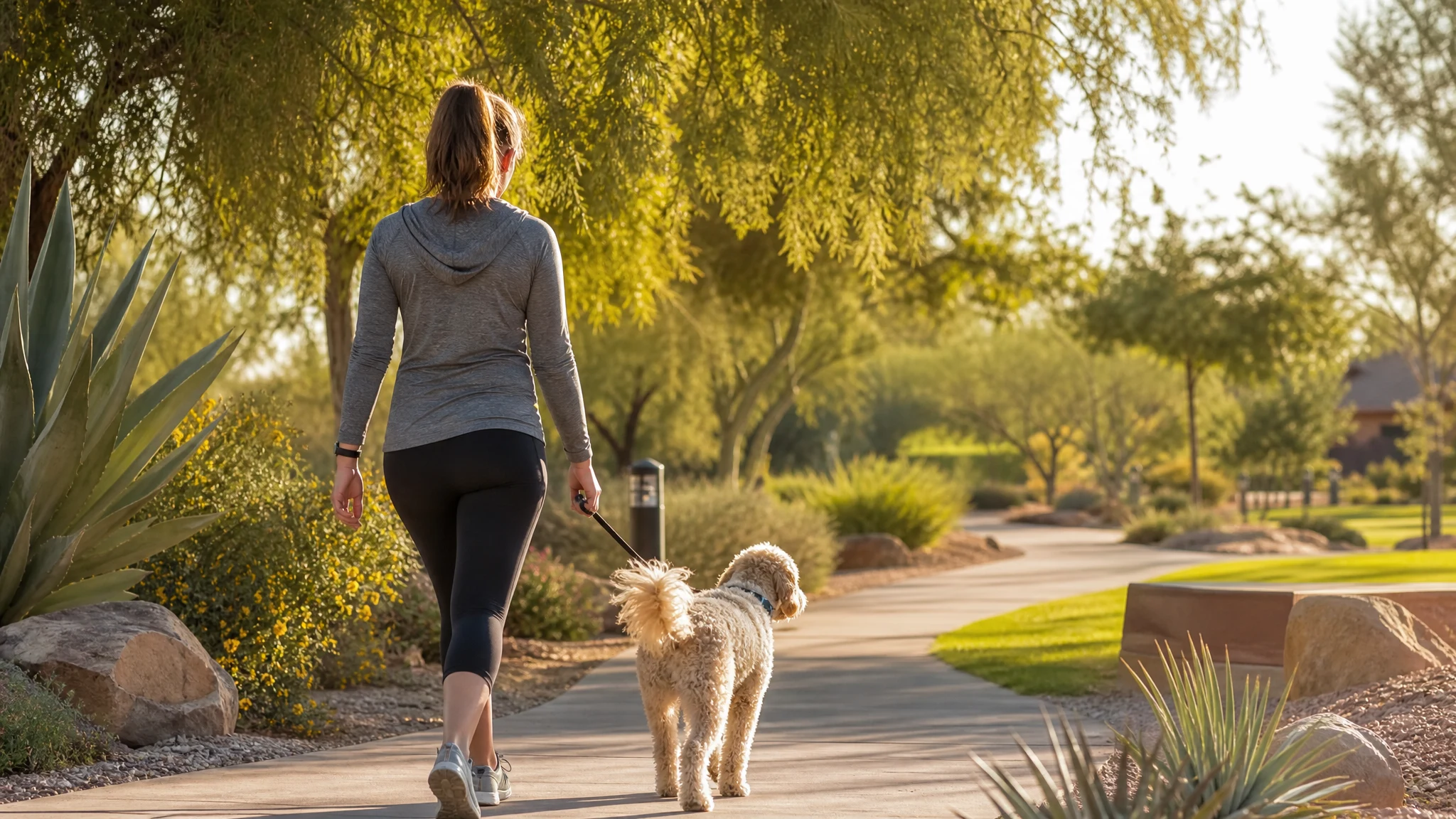
General training information. For aggression, sudden behavior changes or health concerns, see your veterinarian first.
Training a dog in Chandler comes with its own set of questions. Where can you practice around other dogs? What does the county expect from you on a walk? How do you keep a dog comfortable when the pavement is hot? And how do you pick between a group class, a private session and a board-and-train program?
This guide covers those questions in plain words. It explains the kinds of dog training Chandler owners can choose from, what reward-based training means, which certified trainers are listed for the area, which prices are published, and which local rules shape your daily routine. Where we do not have a firm answer, we say so and point you to the agency or business to ask.
Key Takeaways
- There are four common formats: group class, private lessons, day training and board-and-train. Each suits a different dog and a different household.
- The American Veterinary Society of Animal Behavior (AVSAB) recommends reward-based training. Shock, prong and choke collars, alpha rolls and scruffing have no place in a humane plan.
- Maricopa County Animal Care and Control says a dog off the owner's property must be on a leash of no more than six feet and under the owner's control.
- Dogs over three months old must be licensed in Maricopa County and vaccinated against rabies.
- Chandler has four city dog parks with posted hours, weekly maintenance closures and a shared set of rules.
- One Chandler business publishes prices on its website. Most others do not, so ask for a written quote before you commit.
- Aggression toward people is a job for a veterinarian and a certified behavior professional, not a do-it-yourself fix.
Table of Contents
- The Four Kinds of Dog Training Available in Chandler
- What Reward-Based Training Is and Why AVSAB Recommends It
- Certified Dog Trainers Listed for Chandler
- What Dog Training Costs: Published Prices
- Chandler and Maricopa County Rules That Shape Training
- Where to Practice: Dog Parks and Everyday Places
- Heat and Health: Training in the Arizona Climate
- Putting It Together: A Simple Plan
The Four Kinds of Dog Training Available in Chandler
Most people searching for dog obedience training in Chandler end up choosing between four formats. None is better in every case. The right one depends on your dog's age, temperament, your schedule and what you want to change.
Group classes
A group class puts several dogs and owners in one space with an instructor. The instructor teaches a skill, you practice it with your dog, and you go home with homework.
Group classes are a good fit for:
- Puppies and adolescent dogs who need practice focusing around other dogs.
- Owners who want to learn basics like sit, down, loose-leash walking and coming when called.
- Dogs who are friendly or neutral around other dogs.
They are a weaker fit for dogs who are very fearful or reactive. A busy room can make those dogs worse, not better. If your dog lunges, hides or shuts down around other dogs, a private session is usually a calmer place to start.
Before you enroll, ask what vaccines the class requires and whether you can watch a session first. We do not have a Chandler-wide vaccine rule for puppy classes to share, so ask the trainer directly.
Private lessons
In a private lesson, a trainer works with you and your dog alone. Some trainers come to your home. Others meet you at a park or in their own space.
Private lessons suit households with a specific problem, such as pulling on the leash, jumping on guests, barking at the door or nervousness around strangers. Because the trainer sees your real setting, the plan can be built around your actual front door, your actual yard and your actual neighbors.
The key point with private training is that you are still the one doing the work. The trainer coaches you, and you practice between visits.
Day training
In day training, a trainer works with your dog during the day while you are at work or busy. You then get a handoff session so you can learn what your dog has learned and how to cue it.
This can help busy households. The catch is the same as with any training that happens without you: the skills have to transfer to your hands. If you skip the handoff, the behavior may fade at home.
Board-and-train
Board-and-train means your dog stays with a trainer for a set period, often one or two weeks, and gets daily training there. It is the most hands-off format and usually the most expensive.
Ask these questions before you agree to it:
- What methods and tools will be used? Look for reward-based answers only.
- Where will my dog sleep, and how many hours a day will it be training, resting and playing?
- How will I be taught to maintain the behaviors after pickup?
- Can I see updates and the training area?
If a program will not tell you how it trains, treat that as your answer.
What Reward-Based Training Is and Why AVSAB Recommends It
Reward-based training means you teach a dog by rewarding the behavior you want. The reward might be a small treat, a toy, praise, a game or access to something the dog wants, like a sniff or a walk. When a behavior earns something good, the dog does it more often.
The American Veterinary Society of Animal Behavior (AVSAB) recommends reward-based methods. Its position is that punishment-based training, which includes shock, prong and choke collars, can cause fear and stress and can raise the risk of aggression. AVSAB also states that these methods are not needed to get good results.
That is why humane training here means:
- No shock collars, prong collars or choke collars.
- No alpha rolls, scruffing or other "dominance" moves.
- No yelling, hitting or intimidation.
What good reward-based training looks like
Watch a session and you will usually see these things:
- Clear, short cues. The word "sit" means sit, and it is said once.
- Quick rewards. The treat arrives within a second or two of the right behavior, so the dog connects the two.
- Small steps. A dog learns to stay for two seconds before three, and in the kitchen before the park.
- Management. Gates, leashes and closed doors prevent the dog from rehearsing the wrong behavior while it learns the right one.
- Calm, relaxed dogs. A dog that is learning should look curious and willing, not frozen or frantic.
A few basics you can start at home
You do not need to wait for a class to begin. Three habits help almost any dog:
- Reward what you like. When your dog lies quietly on the mat, calmly drop a treat. Most of us only notice dogs when they misbehave.
- Keep sessions short. Five minutes, a few times a day, beats one long session.
- Change one thing at a time. Add distance, duration or distraction, but not all three at once.
When training is not enough
Sudden behavior changes can have a medical cause. If your dog becomes snappy, restless, house-soils after being reliable, or seems to be in pain, see your veterinarian first.
If your dog growls, snaps or bites people, do not try to fix it alone. Call your veterinarian and ask for help finding a certified behavior professional. Keep the dog safely managed in the meantime.
Certified Dog Trainers Listed for Chandler
Dog training is not licensed by the state in the way some trades are, so credentials vary. One way to narrow the field is to look for independent certifications. The listings below come from the trainers' own websites and public directories. We have not tested, trained with or reviewed any of them, and this is not a ranking or a recommendation. Confirm every detail directly before you book.
| Trainer | Business | Credentials listed | Area listed |
|---|---|---|---|
| Julie Yvonne Davis | Kaleidoscope Dog Services LLC | CPDT-KA (the CCPDT directory profile also lists ABCSDT) | Based in Gilbert; serves Gilbert, Queen Creek, Mesa and Chandler |
| Ashley Theis | See Ash Go Dog Training | CPDT-KA, ABCDT, ABCSDT; AKC CGC Approved Evaluator; APDT member | Queen Creek and surrounding cities |
| Steve Watson is the trainer named on the page | East Valley K9 Services / Angel Dogs Animal Assisted Therapy & Intervention | CPDT-KA and AKC Canine Good Citizen Certified Evaluator, listed under "Other qualifications" (not attributed to one person) | Based in Mesa; the site says classes are held in the Chandler area and it serves Mesa, Chandler and Phoenix |
| Sharon Witherspoon | Business not listed | CPDT-KA in a directory listing; also listed as a licensed Victoria Stilwell trainer | Gilbert |
Here are the websites: Kaleidoscope Dog Services, See Ash Go Dog Training, East Valley K9 Services, and Sharon Witherspoon's dog trainer directory listing. You can also verify a CPDT-KA in the CCPDT certified dog trainer directory.
What the letters mean in practice
Credentials show that a trainer has met some standard, such as passing an exam or completing a program. They do not tell you how a trainer treats a nervous dog on a hard day. That is why the questions below matter just as much as the letters.
Questions to ask any trainer
- What methods and equipment do you use? Is any shock, prong or choke collar part of the plan?
- What happens when a dog gets something wrong?
- What is the full price, and what does it include?
- How many dogs are in a class, and what vaccines are required?
- What will I practice at home between sessions?
- How do you handle fearful or reactive dogs?
Notice also that the trainers above are based in neighboring cities. The facts we have about them describe where they say they serve. Ask about travel, class locations and scheduling to see what is practical for your part of Chandler.
We do not have a verified list of certified behavior professionals for Chandler. If your dog has serious fear or aggression, ask your veterinarian for a referral.
What Dog Training Costs: Published Prices
Dog training prices vary widely, and many trainers do not post them. We will not guess at a "typical" range. Instead, here are the figures one Chandler business publishes on its own website.
| Service | Published price |
|---|---|
| In-home training, four weeks, once or twice a week | Starting at $650 |
| At the park training, four weeks, once or twice a week | Starting at $575 |
| Board and train, one week | $2,000 |
| Board and train, two weeks | $3,900 |
These come from Doggie Steps Dog Training (Mark Siebel) in Chandler. We list them only as published information, not as an endorsement, and prices can change. Check the business's site or contact it for current details.
What the numbers tell you
Even from one source, you can see the pattern. Training where you are present, at home or in a park, costs less than a stay at a trainer's facility. Board-and-train costs more because someone else is doing daily work with your dog.
We do not have published Chandler prices for group classes or single private lessons. Ask each trainer for a written quote.
How to compare quotes
- Compare what is included: number of sessions, length of each, follow-up support and any supplies.
- Ask what happens if you miss a session.
- Ask whether there are extra fees for travel or for a second dog.
- Look at the whole plan, not only the sticker price. A cheaper program that does not teach you to maintain the behavior may cost more in the end.
Also remember the costs that come with having a dog in Maricopa County, such as licensing, covered in the next section.
Chandler and Maricopa County Rules That Shape Training
Several rules affect how and where you can train. We have to be honest about one limit: we could not open the Chandler City Code to confirm the exact Chandler wording on every point. The county and state sources below are real and official, but check with the city or county if a rule matters to a decision you are making.
Leash rules
Maricopa County Animal Care and Control says a dog off the owner's property must be on a leash of no more than six feet and under the owner's control. Under the Arizona definition the county uses, a dog not on a leash is "at large," which is a misdemeanor in the cities the county serves. For Chandler's exact code language, check with the city or the county.
For training, this means a long line or a retractable leash is not a substitute for a six-foot leash on a public walk. Save longer lines for fenced areas and ask your trainer how to practice recall safely. Source: Maricopa County Animal Care and Control, Our Field Team.
Licensing and rabies vaccination
Maricopa County Animal Care and Control says dogs over three months old must be licensed in Maricopa County, which issues the licenses. The county lists these fees:
- $22 for a spayed or neutered dog, with a $3 discount per license completed online.
- $55 for an unaltered dog, with a $5 discount per license completed online.
- $10 per spayed or neutered dog for owners 65 or older.
Fees can change, so confirm them with the county before you pay. The county licensing line is 602-506-7387. The county licensing FAQ has the details. The county says not licensing a dog is a misdemeanor in the cities and towns it serves. Whether Chandler is among them is something to confirm with the county.
The county also says a current rabies vaccination is required to get or renew a license. Under Arizona law (ARS 11-1010), the vaccine must be given by a veterinarian or a certified rabies vaccinator. See the county Animal Care and Control FAQ.
This matters for training because dog parks and many classes require a licensed, vaccinated dog.
Barking
Barking is a common reason people look for dog obedience training in Chandler. The Chandler Police Department handles barking complaints. Its Barking Dog Hotline is 480-782-BARK (2275). According to the Chandler Police Department Barking Dog page, an officer responds only when there is a named complainant willing to testify, and charges may be filed against the owner if neighbors cannot resolve the problem.
The Maricopa County barking ordinance (P-6) covers unincorporated areas only. The county says each city or town handles barking under its own laws.
The practical lesson is to address barking early and talk with neighbors. A trainer can help you find out why your dog barks, whether from boredom, alarm, loneliness or excitement, and teach a quiet alternative behavior.
Dog bites
Arizona Revised Statutes 11-1014 says a dog that bites must be reported to the county enforcement agent. An unvaccinated biting dog is quarantined at least ten days. A vaccinated biting dog may be quarantined at home if the county enforcement agent approves. State law also holds owners liable for dog-bite damages, and ARS 11-1025 defines "vicious." Read ARS 11-1014 at azleg.gov. We could not confirm Chandler's own dangerous dog code, so ask the city if you face this situation.
This is one more reason to treat early warning signs seriously. A dog who stiffens, growls or snaps needs a veterinarian and a certified behavior professional now, not after a bite.
Pet limits
If you have several dogs, check with the city for any limit on the number of pets per household. We do not have a confirmed figure to share.
Where to Practice: Dog Parks and Everyday Places
Chandler's four city dog parks
The City of Chandler dog parks page lists four fenced dog parks. Hours and closures below are as the city page showed them, and they can change, so check before you go.
| Park | Address | Hours and closures |
|---|---|---|
| Paseo Vista Recreation Area dog park | 3850 S. McQueen Rd. (north of Ocotillo Rd., west side of McQueen Rd.) | 6 a.m. to 10:30 p.m. Thursday maintenance closure 6 a.m. to 2:30 p.m. |
| Shawnee Park dog park | 1400 W. Mesquite (north of Warner Rd., between Alma School and Dobson roads) | Monday and Wednesday to Saturday 6 a.m. to 8 p.m.; Sunday 9 a.m. to 8 p.m. Closed all day Tuesday for maintenance. |
| Snedigar Sportsplex dog park | 4500 S. Basha Rd. (Alma School Rd., south of Ocotillo Rd.) | 6 a.m. to 10:30 p.m. Wednesday maintenance closure 6 a.m. to 2:30 p.m. The city page noted that the small section was closed for fence repair and the large section was open, which may change. |
| Nozomi Park dog park (formerly West Chandler Park) | 250 S. Kyrene Rd. (south of Chandler Blvd.) | 6 a.m. to 10:30 p.m. Monday maintenance closure 6 a.m. to 2:30 p.m. |
No fee was listed on the city page.
The dog park rules
The city page lists these rules for the dog parks:
- Dogs must be licensed and vaccinated.
- Dogs stay leashed until they are inside the fenced area.
- Dogs must be under voice control.
- Puppies must be older than four months.
- Dogs in season are not allowed.
- The limit is three dogs per owner per visit.
- No children under 12.
The Paseo Vista listing spells these out, and the other three parks follow the same citywide rules.
Using a dog park wisely
A dog park is not a training class. It can be a useful place to practice a calm entry, a recall away from distractions and polite greetings, but only for dogs who enjoy it. Some tips:
- Watch from outside the fence first. Look for loose, bouncy play, not stiff bodies or chasing that one dog does not enjoy.
- Practice a quick check-in at the gate. Have your dog look at you before you open it.
- Leave early if play gets rough. Ending on a good note builds trust.
- Keep your attention on your dog, not your phone.
The "at the park" training format listed in the prices above shows that some trainers use public spaces for lessons. Ask about the location and rules before you book.
Everyday practice spots
Much of the best training happens in ordinary life: the sidewalk outside your home, your own driveway, the quiet hours at a park. Short sessions with real-life distractions build reliable behavior better than occasional marathon sessions. Keep your dog on the six-foot leash on public walks, as the county requires.
Heat and Health: Training in the Arizona Climate
Training in Chandler means planning around heat. Training needs a dog who can think, and an overheated dog cannot.
Hot pavement and summer heat
KJZZ, in a June 2024 report on keeping pets safe in extreme heat, relayed advice from Mesa Animal Control: check the pavement before walks and walk dogs in the cooler parts of the day. It says booties can help but do not guarantee safety. Mesa is a neighboring city, so this is regional advice for the Phoenix area. See KJZZ's report.
For training, that suggests a few habits:
- Book early-morning or evening sessions in warm months.
- Do indoor practice at midday: name games, mat work, hand targets and puzzle feeders.
- Test the ground with the back of your hand. If it is too hot for you, it is too hot for paws.
- Carry water, and stop if your dog pants heavily or slows down.
If your dog shows signs of heat distress, such as heavy panting, drooling, weakness or collapse, contact a veterinarian right away.
Valley fever
A University of Arizona news release says dogs are very susceptible to Valley fever (coccidioidomycosis) and that the disease costs Arizona dog owners at least $60 million per year. This is a statewide figure, not one specific to Chandler. If your dog develops a persistent cough, lethargy or other lasting symptoms, talk with your veterinarian. Read the University of Arizona News release.
Putting It Together: A Simple Plan
Here is a way to move from "I need help" to a working routine.
- Handle the paperwork. Make sure your dog is licensed with Maricopa County and has a current rabies vaccination.
- Rule out health issues. If behavior has changed, see your veterinarian first.
- Choose a format. Puppies and social dogs often do well in a group class. Specific home problems fit a private lesson. Busy schedules may suit day training. A board-and-train stay is the biggest commitment, so ask hard questions first.
- Interview the trainer. Ask about methods and equipment, and walk away from any plan that uses shock, prong or choke collars, alpha rolls or scruffing.
- Get the price in writing. Ask what is included and how follow-up works.
- Practice a little every day. Short, rewarded sessions at home beat occasional long ones.
- Add the real world slowly. Move from kitchen to driveway to quiet park, and only try the dog park when your dog is ready.
- Plan around the heat. Train in the cool hours and have an indoor backup.
Adopting a dog in the area
If you are still choosing a dog, the Arizona Animal Welfare League runs the Chandler Fashion Center Adoption Center at 3111 W. Chandler Blvd., 2nd floor near Dillard's. Its page lists the phone as (602) 781-3906 and hours of Monday to Saturday 10 a.m. to 9 p.m. and Sunday 11 a.m. to 6 p.m. Its main shelter, the Sonia Breslow Adoption Center, is at 25 N. 40th St. in Phoenix.
Maricopa County Animal Care & Control runs an East Shelter at 1920 S. Lewis in Mesa and a West Shelter at 2500 S. 27th Ave. in Phoenix, according to its county page. Neither is in Chandler.
A newly adopted dog often needs a few weeks to settle in. Go slowly, keep routines steady and reward calm behavior from day one.
A word on patience
Dogs learn at different speeds, and no honest trainer promises a specific result. Progress comes from consistency, kindness and good timing. If you feel stuck, that is a sign to ask for help, not a sign you have failed.
Sources
- Maricopa County Animal Care and Control, Our Field Team
- Maricopa County, Animal Care and Control licensing FAQ
- Maricopa County, Animal Care and Control FAQ
- Maricopa County Animal Care & Control
- Chandler Police Department, Barking Dog page
- Arizona Revised Statutes 11-1014 (azleg.gov)
- City of Chandler, Dog Parks
- Arizona Animal Welfare League, Chandler Fashion Center Adoption Center
- CCPDT certified dog trainer directory
- Doggie Steps Dog Training
- KJZZ, Tips to keep pets safe in Arizona's extreme heat (2024-06-10)
- University of Arizona News, Valley fever vaccine study