Puppy Training in Chandler: Classes, Socialization and When to Start
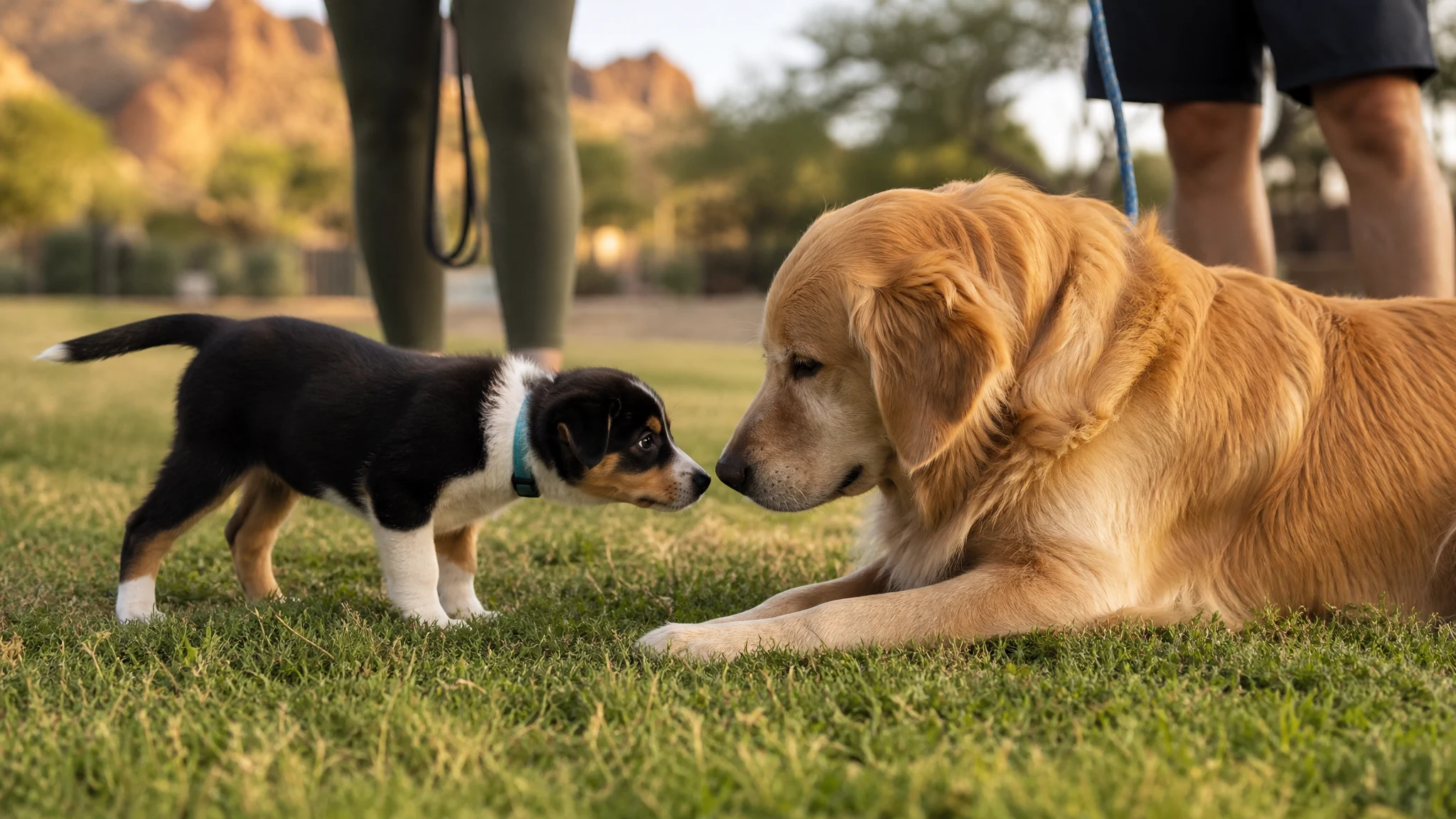
General training information. For aggression, sudden behavior changes or health concerns, see your veterinarian first.
A new puppy in Chandler is a joy, and the first few months are a busy window. What your puppy sees, hears and learns now shapes how comfortable they are with the world later.
This guide walks you through when to start, how to choose puppy training classes, how to socialize safely around Chandler, and what to do in the first weeks at home. It uses reward-based methods only, in line with the American Veterinary Society of Animal Behavior (AVSAB).
When to start: earlier than most people think
Many new owners wait until the vaccine series is finished before doing anything. AVSAB's puppy socialization position takes a different view. It says puppy classes can begin before the vaccine series is complete, as long as sensible precautions are in place.
The reasoning is simple. Early, gentle experiences are a big part of raising a confident adult dog, and the early weeks pass quickly. Waiting for a perfect all-clear can mean missing much of that window.
"Precautions" matter, though. That means a clean, well-managed class space, healthy puppies only, and a talk with your veterinarian about your puppy's vaccine schedule and risk level. Your vet knows your puppy's history and is the right person to say when classes are a good fit.
You can start the home part of training the day your puppy arrives. Name games, settling on a mat and getting used to handling cost nothing and need no class.
Materials you will need
- A flat buckle collar or a well-fitted harness, plus a standard leash no longer than six feet
- Small, soft treats your puppy loves, cut pea-sized or smaller
- A treat pouch or small container so rewards are always within reach
- A crate or a gated puppy area with a comfortable bed
- Safe chew toys and a food puzzle or lick mat
- Enzyme cleaner for house-training accidents
- Your puppy's vaccine and health records, to show your vet and any class provider
- Water and a shade plan for any outing, because of Arizona heat
You do not need a prong, choke or shock collar. Those tools are not part of humane puppy training, and AVSAB advises against aversive methods.
Step 1: Talk to your veterinarian first
Book a puppy visit and bring your questions. Ask which vaccines your puppy has had, when the next ones are due, and what outings your vet considers safe right now.
Arizona has its own health concerns too. Valley fever is one. The University of Arizona reports that dogs are very susceptible to it and that it costs Arizona dog owners at least $60 million per year. This is a statewide figure, not a Chandler number. Ask your vet whether it is something to watch for in your puppy's daily routine.
Licensing and rabies come up here as well. Maricopa County Animal Care and Control says dogs over three months old must be licensed, and that a current rabies vaccination is required to get or renew a license. State law (ARS 11-1010) says the vaccine must be given by a veterinarian or a certified rabies vaccinator. The county's licensing line is 602-506-7387. Check the county's licensing page for current fees before you apply, since amounts can change.
Step 2: Choose a puppy class
Puppy training classes differ a lot, so look closely before you sign up. Whatever you find, ask the questions below.
What to ask any class provider
- Vaccine requirements. Each provider sets its own rules about how many vaccines a puppy needs before the first session. Ask exactly what they require and what paperwork to bring. Do not assume. Then check the answer against your vet's advice.
- Methods. Ask what happens when a puppy gets something wrong. You want treats, toys, praise and redirection. Walk away from anything involving corrections, harsh tools or "dominance" talk.
- Class size and age mix. Small groups of puppies close in age and size are easier on shy pups.
- Structure. Good puppy classes include short play breaks, calm time on a mat and plenty of rest, not just free-for-all play.
- Cleaning and health checks. Ask how the space is cleaned and how sick puppies are handled.
- Observing. Ask if you can watch a session first, or at least talk through a typical class.
A note on credentials. The CCPDT (Certification Council for Professional Dog Trainers) runs a public directory of certified trainers, and the CPDT-KA is one of its credentials. A credential tells you someone passed an exam. It does not tell you whether they are the right fit for your puppy, so still ask the questions above.
Trainers who list Chandler in their service area
These providers publish a connection to Chandler or the nearby East Valley. We have not tested or reviewed them, and this is not a ranking. Confirm directly whether they run puppy classes and what each one requires.
- Julie Yvonne Davis, Kaleidoscope Dog Services LLC. Based in Gilbert. The CCPDT directory lists CPDT-KA (and ABCSDT), and the business serves Gilbert, Queen Creek, Mesa and Chandler.
- Ashley Theis, See Ash Go Dog Training. Based in Queen Creek and surrounding cities. Credentials listed on the site include CPDT-KA, ABCDT and ABCSDT, and an AKC Canine Good Citizen Approved Evaluator.
- East Valley K9 Services. Based in Mesa. The site lists CPDT-KA and AKC Canine Good Citizen Certified Evaluator under other qualifications, and says classes are held in the Chandler area.
- Sharon Witherspoon. Listed in the dog trainer directory with CPDT-KA, based in Gilbert.
If you would rather have one-on-one help, Doggie Steps Dog Training in Chandler publishes prices on its own site. In-home training over four weeks, once or twice a week, starts at $650. At-the-park training over four weeks starts at $575. Board and train is listed at $2,000 for one week or $3,900 for two. These are general training packages, so ask whether they suit a young puppy, and check the site for current prices.
Step 3: Socialize safely around Chandler
Socialization does not mean letting your puppy meet every dog and person. It means pairing many new, calm experiences with good things, such as treats, a happy voice and distance when needed.
Build a checklist of gentle exposures
- Different surfaces: tile, grass, gravel, a wobbly board, a car mat
- Sounds: vacuum, doorbell, a skateboard rolling by, traffic from a safe distance
- People: hats, sunglasses, umbrellas, a visitor in a wheelchair or with a cane
- Handling: paws, ears, mouth, a gentle brush, a towel dry
- Car rides that end somewhere pleasant, not just at the vet
Where to go while vaccines are in progress
Stick to places where unknown dogs have not been sniffing the ground. Your own yard and block, a friend's home with a healthy, vaccinated dog, and a quiet spot where you can sit and watch the world are all good options. Carrying your puppy and letting them watch from your arms counts as socializing, too. Your vet can tell you which public spaces are fine at your puppy's stage.
Chandler dog parks: not yet
Chandler's city dog parks are Paseo Vista Recreation Area, Shawnee Park, Snedigar Sportsplex and Nozomi Park. The City of Chandler's dog park page lists the rules, and they include that dogs must be licensed and vaccinated, puppies must be older than four months, and children under 12 are not allowed. Each park also has a weekly maintenance closure, so check the city page for current hours before you go.
Because of the age rule, an under-four-months puppy cannot use these parks. That is a good reason to lean on class, a few carefully chosen playmates and calm outings for now. Even once your puppy is old enough, busy off-leash play is not the same as good socialization, and many dogs do better with a few known friends.
Leash rules on the street
Maricopa County Animal Care and Control says a dog off the owner's property must be on a leash of no more than six feet and under the owner's control, and that a dog without a leash is considered "at large." Chandler's own city code text was not available for us to quote, so check the City of Chandler or the county if you have questions about local rules.
Beat the Arizona heat
Heat shapes every outing here. KJZZ, reporting Mesa Animal Control advice, says to check pavement before walks and to walk dogs in the cooler parts of the day. It adds that booties can help but do not guarantee safety. Mesa is a neighboring city, so this is regional advice for the Phoenix area.
Try the back of your hand on the pavement for several seconds. If it is uncomfortable for you, skip it. Early morning and evening outings, shady spots and short sessions keep puppies safer and happier.
Step 4: Set up the first weeks at home
- Day one: set a routine. Meals, potty trips, naps and play at roughly the same times each day help a puppy relax. Young puppies need frequent potty breaks, especially after waking, eating and playing.
- Teach the name game. Say your puppy's name in a happy voice. When they look at you, mark it with "yes!" and give a treat. Do a few quick repetitions at a time, several times a day.
- Reward potty success. Take your puppy to the same outdoor spot, wait calmly, then reward right after they finish. If an accident happens, clean it with enzyme cleaner and do not scold. Scolding teaches a puppy to hide, not to wait.
- Introduce the crate slowly. Toss treats inside, feed meals near it and close the door for only a few seconds at first. Build up gradually, so it feels like a bedroom, not a punishment.
- Practice settling. Reward your puppy for lying on a mat while you read or watch TV. This calm habit pays off for the dog's whole life.
- Teach sit, down and come. Use a treat to lure each position, then add a word. For "come," make it the best thing ever: happy voice, a treat, no scolding if they are slow.
- Handle for health. Touch paws, ears and mouth briefly, then treat. This makes future vet and grooming visits easier.
- Start leash skills indoors. Let your puppy wear the collar or harness, then walk a few steps inside, rewarding when the leash is loose.
Tips for good sessions
- Keep training sessions to a few minutes. Puppies tire quickly.
- Reward quickly, within a second or two of the behavior you like.
- Use part of your puppy's regular meal as training treats to avoid overfeeding.
- Let your puppy leave an experience if they seem unsure. Offer distance and a treat, not pressure.
- Plan for naps. Overtired puppies mouth, zoom and whine more.
- Practice in the quiet before asking for focus around distractions.
Common mistakes to avoid
- Waiting too long to start. Training begins on day one. Ask your vet about classes rather than waiting by default.
- Flooding the puppy. Too much, too fast can backfire. One calm new thing at a time is better than a crowd.
- Forcing greetings. Let your puppy approach on their own terms.
- Using harsh corrections. Scolding, leash jerks, alpha rolls and scruffing can damage trust and make behavior problems more likely. AVSAB recommends reward-based training.
- Letting a puppy play with every dog. Rough or pushy dogs can teach a puppy to be fearful or rude.
- Hot-weather outings at the wrong time. Midday walks on pavement are risky in the Valley.
- Skipping the barking plan. If barking becomes a problem, Chandler Police run a Barking Dog Hotline at 480-782-BARK (2275). Their page says an officer responds only when there is a named complainant willing to testify. Good early training and enough exercise can help you avoid that situation altogether.
What to expect
Puppies learn at different rates, and no class or method can promise a specific result. With steady practice, many owners see a puppy who settles more easily, comes when called more often and handles new places with less fuss within a few weeks. Plenty of puppies also go through awkward phases, where they seem to forget things. That is normal, and it usually helps to go back to easier steps.
Expect to keep training for months, not days. Puppy class is a start, and daily practice at home does most of the work.
When to call your veterinarian
See a veterinarian for any sudden illness, vomiting, diarrhea, lethargy, limping or pain, or if your puppy seems very fearful, because medical problems can look like behavior problems. If a puppy shows aggression toward people, such as growling, snapping or biting that is more than normal mouthing, contact your veterinarian and a certified behavior professional.
If your puppy bites someone, Arizona law matters. ARS 11-1014 says a dog bite must be reported to the county enforcement agent, and the dog may need to be quarantined. Check the statute and contact Maricopa County Animal Care and Control for the steps that apply to you.
Adopting a puppy locally
If you are still looking for a puppy, the Arizona Animal Welfare League runs an adoption center at 3111 W. Chandler Blvd., on the second floor near Dillard's, with a phone number of (602) 781-3906. Maricopa County Animal Care and Control also runs shelters in Mesa and Phoenix. Check each organization's page for current hours and available dogs.
Sources
- City of Chandler, Dog Parks
- Maricopa County Animal Care and Control, Our Field Team
- Maricopa County, Animal Care and Control licensing FAQ
- Maricopa County, Animal Care and Control FAQ (rabies)
- Arizona Revised Statutes 11-1014
- Chandler Police Department, Barking Dog page
- KJZZ, Tips to keep pets safe in Arizona's extreme heat
- University of Arizona News, Valley fever and dogs
- CCPDT directory profile, Julie Yvonne Davis
- See Ash Go Dog Training
- East Valley K9 Services
- Doggie Steps Dog Training
- Arizona Animal Welfare League, Chandler adoption center