Training Your Dog for Chandler's Weather and Terrain
General training information. For aggression, sudden behavior changes or health concerns, see your veterinarian first.
Living in Chandler means sharing the sidewalk with the sun for a good part of the year. Walking a dog in heat takes planning, and a few trained habits make it safer and calmer for both of you.
This guide covers the two hazards with a documented source for the Phoenix metro area: hot pavement and valley fever. For each one, you will see what it is, where the information comes from, and which training skills help. Good chandler dog safety starts with those skills, plus a willingness to change the plan when the weather says so.
What You Need
- A standard flat collar or a well-fitted harness, and a leash no longer than six feet
- Soft, small treats your dog loves, cut into pea-sized pieces
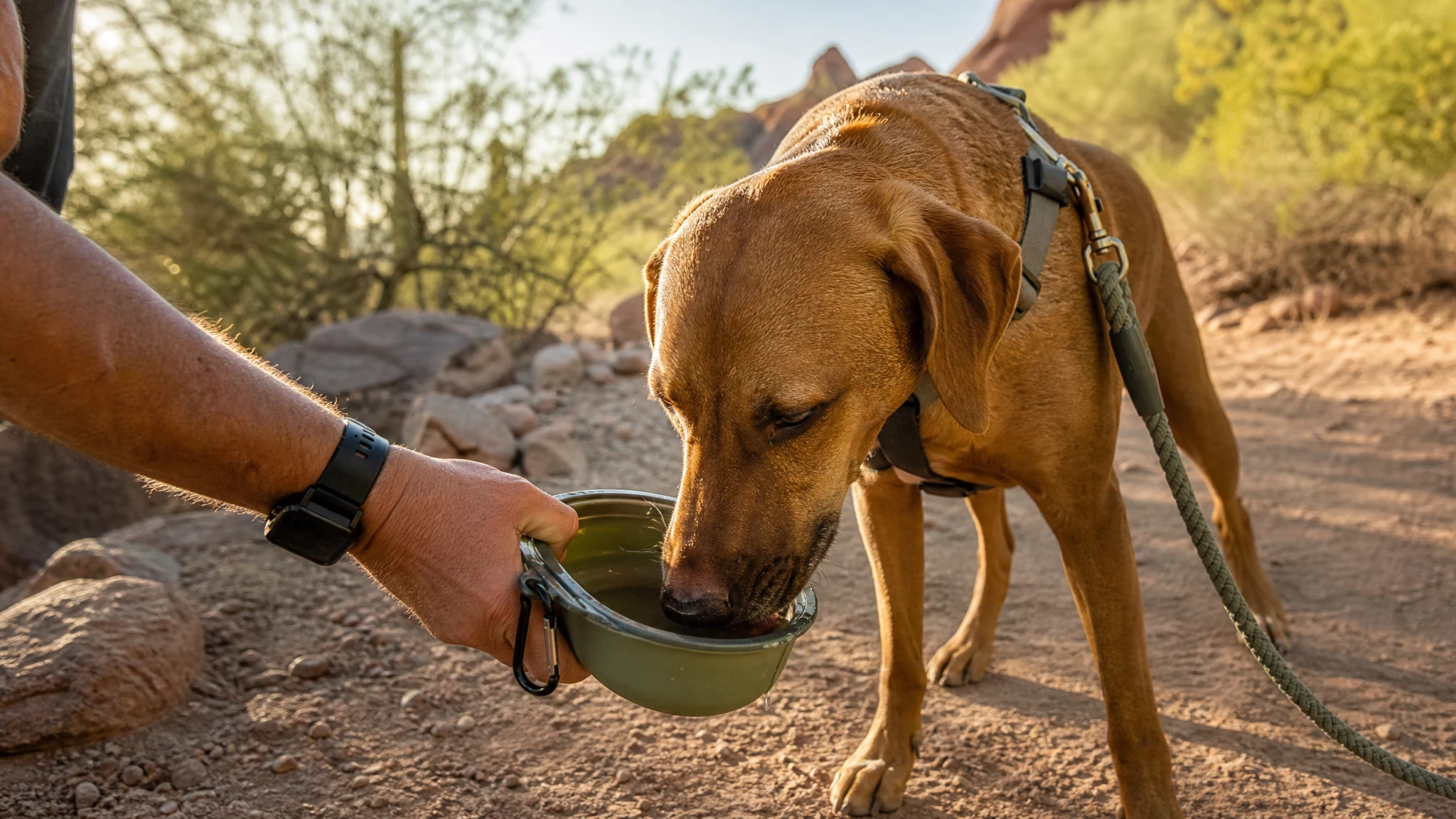
- Fresh water and a collapsible bowl for every outing
- Dog booties, if you want to teach your dog to wear them (optional)
- A clean, dry towel for wiping paws after walks
- A shady or indoor spot at home where your dog can settle
- A phone number for your veterinarian, saved where you can find it fast
Hazard 1: Hot Pavement and Summer Heat
What it is and where the advice comes from
KJZZ, the public radio station run by Rio Salado College, reported advice from Mesa Animal Control in a June 2024 story called "Tips to keep pets safe in Arizona's extreme heat." The advice was to check the pavement before walks and to walk dogs in the cooler parts of the day. The story also said booties can help but do not guarantee safety.
Mesa is a neighboring city, so this is regional advice for the Phoenix area rather than a Chandler rule. It still fits the sidewalks and parking lots here. Hot pavement dogs encounter is not a problem you can solve with training alone, but training makes the safer choices easier to follow.
Step 1: Build a "Wait While I Check" habit
Before any walk, you will check the ground. Teach your dog that this pause is part of the routine.
- Stand at the door with your dog on leash.
- Ask for a sit. Reward it with a treat.
- Press the back of your hand to the pavement or driveway for a few moments. If it feels too hot for your skin, it is too hot for paws.
- While you check, quietly feed a few treats so the pause feels good.
- Release with a cheerful cue like "let's go," only when the surface or the plan is safe.
Practice this every walk, even in cooler months. Dogs that learn to wait politely at the door are easier to manage on days when you decide to turn back.
Step 2: Shift walks to cooler parts of the day
This is a schedule change more than a training skill, but your dog's behavior will shift with it. Dogs that are used to a midday walk may pull, whine or pace when the routine moves to early morning or after sunset.
- Move the walk a little earlier or later each day rather than all at once.
- Give your dog a short, predictable cue at the new time, such as bringing the leash to the same spot.
- Reward calm behavior while you clip the leash on.
- Use indoor games during the heat of the day: scent games with treats, simple trick practice, or a food puzzle.
If you want a place to exercise in the evening, the city's dog parks list their hours on the City of Chandler parks page. Paseo Vista Recreation Area, Snedigar Sportsplex and Nozomi Park are listed as open from 6 a.m. to 10:30 p.m., each with one weekday maintenance closure. Shawnee Park is listed as open until 8 p.m. and closed all day Tuesday. Check the city page for current hours and notices before you go, since closures can change.
Step 3: Teach a cooling-down routine
A dog that settles quickly after exercise is easier to cool down and to watch for signs of trouble.
- Choose a mat or bed in a shaded or indoor spot.
- Say "place" and toss a treat onto the mat.
- When your dog steps on it, reward again, then reward for lying down.
- Offer water in a bowl. Do not force it.
- After a few weeks of practice, use the mat after every walk.
Short sessions work best. Two or three minutes at a time, a few times a day, is plenty for most dogs.
Step 4: Teach paw handling
Dogs that accept having their paws touched make it easy for you to check for redness, blisters or debris after a walk. If your dog dislikes paw touching, go slowly.
- Touch your dog's shoulder, then give a treat.
- Move gradually down the leg over several sessions, treating at each step.
- Touch a paw for one second, treat, and stop.
- Slowly build to gently holding the paw and spreading the toes.
- Finish with a towel wipe, paired with a treat.
If your dog pulls away, you went too fast. Go back one step and keep it easy. If a paw looks injured, call your veterinarian rather than treating it yourself.
Step 5: Introduce booties slowly
KJZZ's reporting says booties can help but do not guarantee safety. That means they are a tool, not a replacement for checking the ground and choosing your walk times. If you want to try them, teach your dog to accept them first.
- Let your dog sniff a bootie and reward the sniff.
- Touch the bootie to a paw, then treat.
- Put one bootie on for a few seconds, treat, and remove it.
- Gradually add more booties and more time, indoors on a floor your dog knows.
- Take short practice walks only after your dog moves comfortably in them.
Many dogs high-step or freeze at first. That is normal. Go at your dog's pace, and stop if your dog seems distressed.
Heat emergencies
If your dog collapses, vomits, seems confused, or is struggling to breathe after time in the heat, contact a veterinarian right away. Do not wait to see if it passes.
Hazard 2: Valley Fever
What it is and where the information comes from
Valley fever is the common name for coccidioidomycosis. A University of Arizona News release says dogs are very susceptible to it, and that the disease costs Arizona dog owners at least $60 million per year. That is a statewide figure, not a Chandler number.
The same university news item is about research on a vaccine for dogs. Whether a vaccine is available or right for your dog is a question for your veterinarian. This article does not give medical advice on prevention or treatment, and training cannot prevent the disease.
What training can do
Training helps in the background. A dog that is easy to handle is easier to examine, and an owner who knows their dog's normal behavior notices changes sooner.
- Practice calm vet handling. Teach your dog to stand still for gentle touches on the chest, belly and legs, with treats. Short, happy handling sessions make exams less stressful.
- Learn your dog's baseline. Notice your dog's normal energy, appetite, breathing and cough. If something changes and stays changed, call your veterinarian.
- Teach "leave it." This helps with many outdoor hazards. Hold a treat in a closed fist, wait for your dog to stop pawing and sniffing, then reward from the other hand. Build up to leaving items on the ground and, later, items you place on the sidewalk.
- Teach a reliable "come." Practice in a low-distraction place first, on a leash or long line, and reward generously. A solid recall helps you call your dog away from digging spots or anything unsafe, but a leash is still the rule off your property.
On leash rules, Maricopa County Animal Care and Control says a dog off the owner's property must be on a leash of no more than six feet and under the owner's control. Check with the City of Chandler or the county if you need the exact local wording.
Putting It Together: A Simple Weekly Plan
| Skill | How often | Session length |
|---|---|---|
| Wait at the door while you check the ground | Every walk | About 30 seconds |
| Place and settle after exercise | Daily | 2 to 3 minutes |
| Paw handling | Daily | 1 to 2 minutes |
| Bootie introduction (optional) | A few times a week | Under 5 minutes |
| Leave it and recall | Most days | 3 to 5 minutes |
Tips for Success
- Keep sessions short and end while your dog is still eager.
- Use high-value treats outdoors, where there is more to distract your dog.
- Reward calm behavior, not just correct answers.
- Carry water on every outing, even short ones.
- If your dog is slowing down, panting hard or lagging behind, stop and head for shade.
- On very hot days, skip the walk and use indoor enrichment instead.
Common Mistakes to Avoid
- Trusting the air temperature alone. Pavement can be much hotter than the air. Check the ground itself.
- Treating booties as a guarantee. The KJZZ report says they do not guarantee safety.
- Rushing paw handling. Forcing it can teach your dog to avoid it.
- Using punishment. The American Veterinary Society of Animal Behavior supports reward-based training. Fear and pain tend to make behavior problems worse, not better.
- Waiting on symptoms. A cough, low energy or appetite change that lingers deserves a call to your veterinarian.
What to Expect
With regular, patient practice, many dogs learn to wait at the door, settle on a mat and accept paw checks within a few weeks. Bootie comfort often takes longer, and some dogs never like them. Results vary by age, temperament and history, and no training plan can remove the risks of heat or disease.
These skills may make hot-weather walks easier to manage and may help you spot problems earlier. They work best alongside sensible scheduling and regular veterinary care.
When to Get Extra Help
If your dog panics at handling, resists the leash, or shows aggression toward people, talk to your veterinarian first. Pain can be behind sudden behavior changes. Aggression toward people calls for a veterinarian and a certified behavior professional together.
For help finding a trainer and understanding what local training involves, see our guide to dog training in Chandler, where to train and what it costs.